
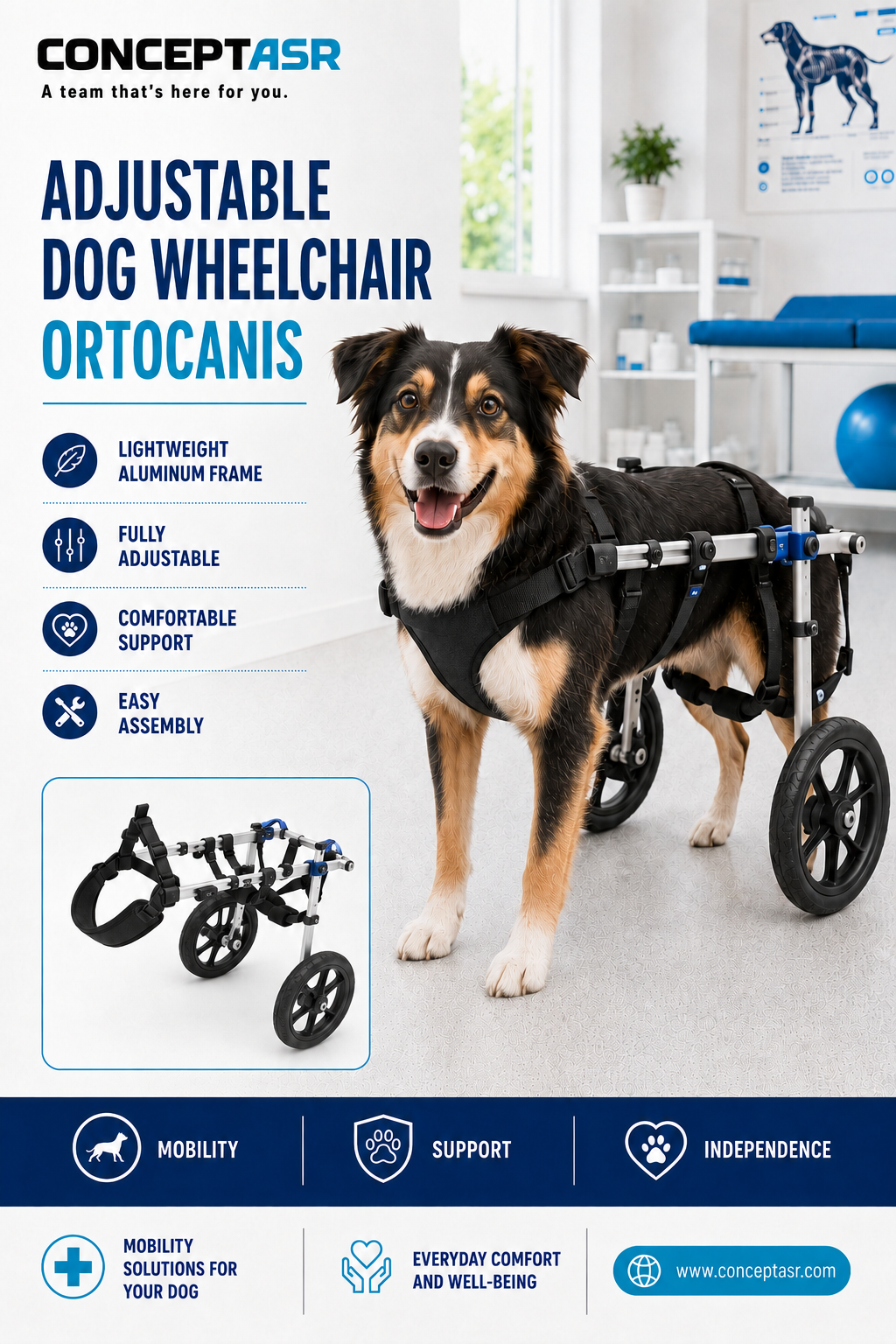
An adjustable dog wheelchair can help dogs with reduced hind-leg mobility remain active, supported and more independent. The Ortocanis wheelchair is designed for dogs experiencing weakness, paralysis or difficulty supporting their hindquarters. Its lightweight, adjustable structure can be adapted according to the dog’s weight and measurements.
Adjustable Dog Wheelchair for Mobility Support
The Ortocanis adjustable dog wheelchair supports the dog’s hindquarters while allowing the front legs to move naturally. Depending on the dog’s condition, the rear legs may remain free for assisted movement or be supported to prevent them from dragging on the ground.
This mobility aid may be appropriate for dogs experiencing partial or complete loss of mobility in the rear limbs. It may also be incorporated into a rehabilitation program when recommended by a veterinarian or qualified canine rehabilitation professional.
The wheelchair helps the dog participate in supervised movement without placing its full body weight on weakened hind legs. Maintaining an appropriate level of activity may help support physical conditioning and reduce some of the complications associated with prolonged inactivity.
Common Uses
An adjustable dog wheelchair may be considered for dogs affected by:
• Hind-leg weakness or paralysis
• Degenerative mobility conditions
• Hip dysplasia or osteoarthritis
• Intervertebral disc problems
• Neurological or proprioceptive deficits
• Reduced mobility following an injury or surgical procedure
• Age-related weakness
• Rehabilitation requiring supported movement
The appropriate use of a wheelchair depends on the dog’s diagnosis, physical abilities and overall health. Veterinary guidance is strongly recommended before introducing any new mobility equipment.
Lightweight and Adjustable Construction
The Ortocanis wheelchair features a durable aluminum structure designed to provide support while remaining lightweight. Its adjustable components allow the frame to be adapted to the dog’s proportions.
The wheelchair can be adjusted vertically and horizontally to promote proper positioning. Adjustable straps help secure the dog while allowing comfortable movement of the front legs.
Because dogs of similar breeds and weights may have different proportions, selection should never be based on breed alone. Accurate measurements are essential for choosing the correct model and achieving an appropriate fit.
The wheelchair is supplied with the components and instructions required for assembly and adjustment. Always verify every connection and adjustment before allowing the dog to use the equipment.
Measuring Your Dog
To choose the correct adjustable dog wheelchair, two essential pieces of information are required:
• The dog’s approximate body weight
• The distance from the floor to the groin
Measure the floor-to-groin distance while the dog is standing in a natural position whenever possible. The measurement should extend vertically from the floor to the highest point on the inside of the rear leg.
Use a flexible measuring tape and record the measurement carefully. If the dog cannot stand independently, ask another person to support the dog in a natural standing posture without lifting the hindquarters higher than normal.
Please contact ConceptASR before ordering if you are uncertain about the measurements or the appropriate wheelchair configuration.
Introducing the Wheelchair
Dogs may require a gradual adjustment period. Begin with short, supervised sessions in a quiet, level and obstacle-free area.
Check that the frame remains level and that the straps provide support without excessive pressure. The wheelchair should not interfere with normal breathing or create friction around the chest, abdomen or groin.
Monitor the dog’s posture, movement and behaviour carefully. Stop the session if the dog shows signs of unusual fatigue, distress, skin irritation or discomfort.
The duration and frequency of use should be adapted to the dog’s physical condition and professional recommendations. A wheelchair should not be used as an unsupervised restraint or left on the dog for extended periods without regular checks.
Daily Care and Safety
Inspect the frame, wheels, fasteners and straps before every use. Confirm that all components are secure and properly positioned.
Use the wheelchair on suitable surfaces and avoid steep slopes, stairs, deep snow, unsafe terrain and areas where the wheels may become trapped. Supervision is required whenever the dog is using the wheelchair.
Regularly inspect the skin in all areas that come into contact with the straps or supports. Keep the equipment clean and dry according to the care instructions supplied with the product.
Professional Support from ConceptASR Vet
ConceptASR Vet offers personalized assistance in English and French to help customers review the required measurements and available mobility solutions.
The adjustable dog wheelchair is intended to support mobility and quality of life. It does not replace a veterinary diagnosis, medical treatment, rehabilitation program or professional follow-up.
Consult a veterinarian if your dog is experiencing pain, sudden weakness, paralysis, loss of coordination or a significant change in walking ability. A veterinarian or canine rehabilitation professional can determine whether a wheelchair is appropriate and provide recommendations for safe, progressive use.

Reviews
There are no reviews yet.