
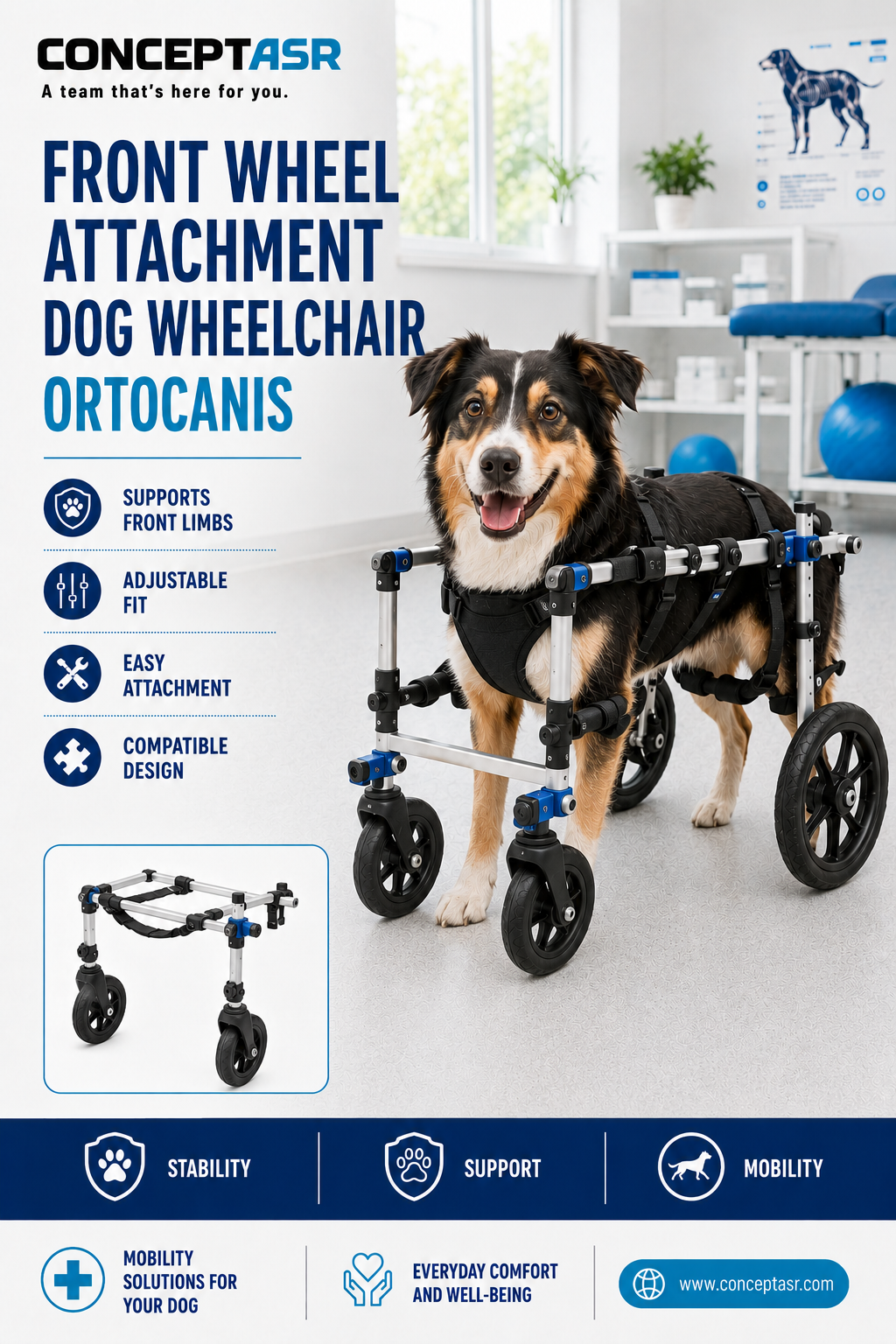
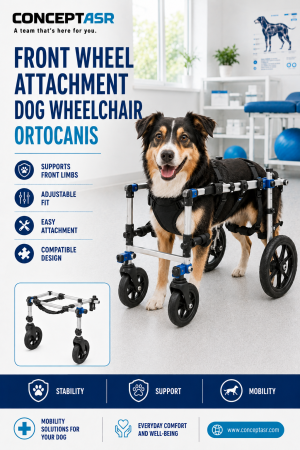
A front wheel attachment for dog wheelchair systems provides additional support for dogs experiencing weakness or reduced mobility in their front limbs. This Ortocanis accessory connects to the compatible adjustable dog wheelchair to create a four-wheel mobility system supporting both the front and rear areas of the dog’s body.
Front Wheel Attachment for Dog Wheelchair Support
The Ortocanis front wheel attachment is designed specifically for use with the Ortocanis adjustable dog wheelchair. It is not a complete wheelchair and should not be used as a separate mobility device.
The standard adjustable wheelchair supports dogs with hind-limb weakness or paralysis. When a dog also develops weakness in the front legs, this attachment adds two front wheels and an additional supporting structure to the existing wheelchair.
The resulting four-wheel configuration may help the dog maintain better balance and distribute support across the body while moving under supervision.
When Is the Front Wheel Attachment Used?
The accessory may be considered for dogs experiencing:
• Weakness in both the front and rear limbs
• Reduced weight-bearing ability in the front legs
• Neurological or proprioceptive difficulties
• Progressive mobility limitations
• Generalized muscle or joint weakness
• Recovery requiring four-limb mobility support
• Difficulty maintaining balance in a rear-wheel wheelchair
A veterinarian or qualified canine rehabilitation professional should evaluate the dog before a front wheel attachment is introduced. The appropriate mobility equipment will depend on the dog’s diagnosis, strength, coordination, posture and rehabilitation objectives.
Compatible with the Ortocanis Adjustable Dog Wheelchair
This product is an accessory for the compatible Ortocanis adjustable dog wheelchair. Before ordering, verify that the wheelchair model and measurements correspond to the options available for the front attachment.
If the wheelchair and front wheel attachment are ordered together, the components can be selected according to the same measurements.
If you already own an Ortocanis wheelchair, choose the same size and measurement range used when the original wheelchair was purchased. Contact ConceptASR if you are unsure about compatibility.
Do not attempt to connect this attachment to an unrelated wheelchair model. Compatibility with mobility devices manufactured by other companies is not guaranteed.
Measurements Required
To select the appropriate front wheel attachment for dog wheelchair use, provide:
• The dog’s approximate body weight
• The distance from the floor to the groin
• The appropriate colour, when a colour choice is offered
Measure the floor-to-groin distance while the dog is standing in a natural position whenever possible. Measure vertically from the floor to the highest point on the inside of the rear leg.
If the dog cannot stand without assistance, ask another person to provide gentle support while maintaining the dog’s normal standing height. Do not lift the hindquarters higher than their natural position.
Accurate measurements are essential. Dogs with similar weights or breeds may have very different proportions.
Adjustable Four-Wheel Mobility Support
The attachment adds a front structure and two wheels to the adjustable rear wheelchair. Its components are designed to align with the compatible Ortocanis frame and provide additional stability for dogs requiring front-limb support.
The adjustable construction allows the system to be adapted to the dog’s measurements and natural posture. All bars, supports, straps and fasteners must be positioned correctly before use.
The dog should stand in a balanced position without excessive pressure on the chest, abdomen, groin or limbs. The equipment must not restrict breathing or cause the dog to lean unnaturally.
Introducing the Four-Wheel System
Allow the dog to become familiar with the equipment gradually. Begin with brief, supervised sessions in a quiet area with a firm, level and non-slip surface.
Some dogs may need time to understand how to move within a four-wheel mobility system. Use calm encouragement and allow the dog to progress at an appropriate pace.
Check the dog’s posture, behaviour and comfort throughout each session. Stop using the equipment if you observe distress, persistent resistance, unusual fatigue, skin irritation or signs of discomfort.
A rehabilitation professional may recommend specific exercises, session lengths or progression based on the dog’s physical condition.
Safety and Maintenance
Inspect the complete wheelchair system before every use. Verify that:
• The front attachment is securely connected
• All wheels rotate properly
• Fasteners and adjustment points are tight
• Straps remain correctly positioned
• No component is damaged, loose or excessively worn
Use the equipment only under supervision. Avoid stairs, steep inclines, deep snow, uneven terrain and areas where the wheels could become trapped.
Regularly examine the dog’s skin wherever it touches the harnesses or support components. Keep the frame, wheels and straps clean and dry according to the supplied care instructions.
ConceptASR Vet Assistance
ConceptASR Vet provides personalized assistance in English and French. We can help customers review the required measurements and confirm compatibility with an existing Ortocanis adjustable dog wheelchair.
The front wheel attachment is intended to provide mobility support. It does not replace veterinary diagnosis, treatment, rehabilitation or professional follow-up.
Consult a veterinarian if your dog develops new front-leg weakness, loss of coordination, pain or a significant change in mobility. A professional assessment is especially important when weakness begins to affect multiple limbs.
Reviews
There are no reviews yet.