
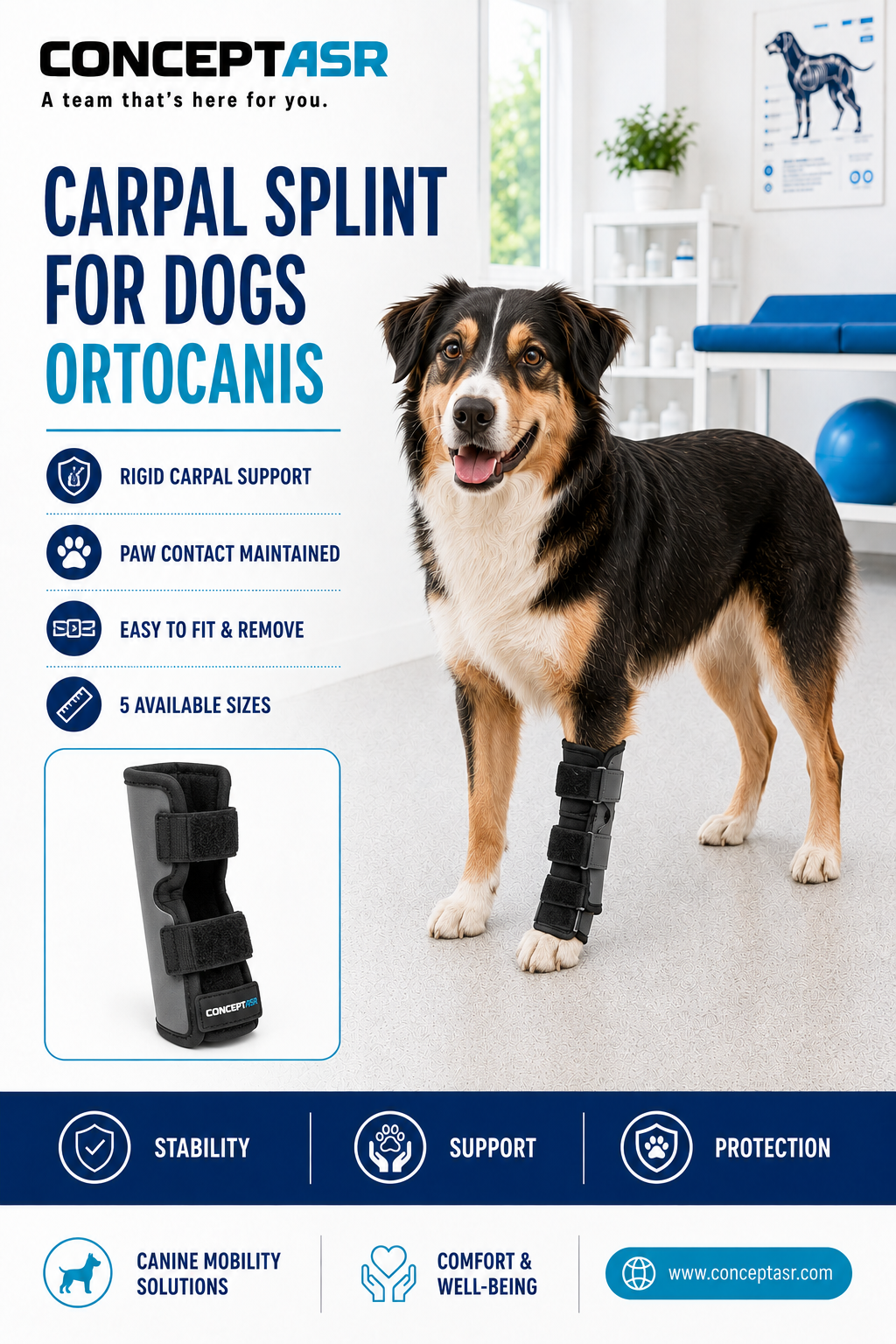
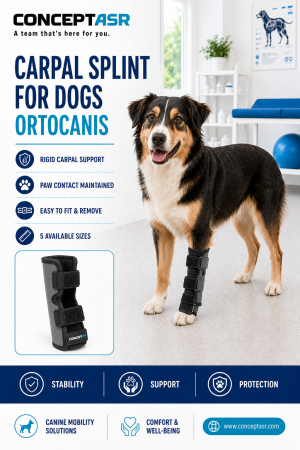
A carpal splint for dogs provides rigid support and complete immobilization of the carpal joint while allowing the paw pads to remain in contact with the ground. Designed by Ortocanis, this orthopedic splint can help stabilize the front leg following certain injuries or veterinary procedures.
Unlike a full-leg splint that extends underneath the paw, this model supports the carpus while leaving the paw and toes free. This design allows the dog to maintain natural contact with the floor while the carpal region remains securely supported.
The Ortocanis carpal splint may be suitable for dogs requiring temporary immobilization, additional stability or controlled support during a veterinarian-supervised recovery period.
Rigid Support for the Canine Carpus
The carpus is the joint located between the dog’s front paw and forearm. It performs a function comparable to the human wrist and plays an important role in stability, balance and weight-bearing.
An injury affecting this area may make standing and walking difficult or uncomfortable. The Carpal Splint for Dogs | Ortocanis is designed to limit movement at the carpal joint and provide structured external support.
Its rigid construction helps maintain the joint in a stable position. Adjustable closures make the splint easier to fit, remove and inspect than a traditional bandage.
Recommended Uses
This orthopedic carpal splint may be recommended by a veterinarian for situations involving:
- Carpal joint instability
- Tendon or ligament injuries
- Postoperative immobilization
- Temporary support during recovery
- Controlled stabilization of the front leg
- Conditions requiring restricted carpal movement
The appropriate duration and frequency of use will depend on the dog’s condition and the recommendations provided by the treating veterinarian or animal rehabilitation professional.
Paw Contact Is Maintained
The splint stabilizes the carpal region without completely enclosing the dog’s paw. The paw pads and toes remain in contact with the ground, helping the dog maintain sensory feedback and a more natural standing position.
If the dog’s paw or toes must also be immobilized, this carpal model may not provide sufficient coverage. In that situation, a full front-leg splint extending beneath the paw may be more appropriate.
Consult your veterinarian before choosing between the two designs.
Five Available Sizes
The Ortocanis carpal splint is available in five sizes:
- XS / Cat: splint length 12.7 cm and width 3 cm
- Small: splint length 14.6 cm and width 4 cm
- Medium: splint length 15.9 cm and width 4.3 cm
- Large: splint length 16.5 cm and width 5 cm
- Extra Large: splint length 19.1 cm and width 5.5 cm
The XS size can also be suitable for cats and certain very small dogs.
The dimensions shown in the size chart refer to the splint itself. Measure the dog’s front leg according to the product measuring diagram and compare the measurement carefully with the available sizes.
If your dog falls between two sizes, Ortocanis recommends selecting the larger size.
Do not choose a size based only on breed or approximate weight. Dogs of the same breed can have different proportions, joint circumferences and leg lengths.
Gradual Introduction and Regular Inspection
Introduce the splint gradually unless your veterinarian provides different instructions. Short initial sessions can help the dog become accustomed to the support and allow you to verify the fit.
Check the dog’s skin regularly, especially around the edges and fastening points. The splint should provide stable support without creating excessive pressure, restricting circulation or causing persistent rubbing.
Remove the product and consult a veterinary professional if you notice redness, swelling, skin irritation, unusual discomfort or a change in the dog’s behaviour.
Make sure all closures are secure before the dog begins walking. The splint should remain properly positioned without sliding or rotating around the leg.
Easy to Remove and Reapply
The adjustable fastening system allows the splint to be removed for skin inspection, hygiene and veterinary evaluation. This can make daily monitoring easier than with a conventional bandage.
Always follow the fitting, cleaning and usage instructions supplied with the product. The dog should be supervised while wearing the splint, particularly during the initial adjustment period.
Professional Guidance Is Recommended
A carpal splint for dogs should be selected according to the dog’s diagnosis, anatomy and rehabilitation requirements. It is not intended to replace veterinary assessment, medical treatment or professional follow-up.
Consult a veterinarian if your dog is experiencing pain, swelling, weakness, limping, trauma or difficulty bearing weight on a front leg. A veterinary professional can determine whether rigid carpal immobilization is appropriate and provide instructions concerning fit, duration of use and activity restrictions.
ConceptASR Vet offers personalized assistance in English and French to help you review the measurements and available sizing before ordering.
Reviews
There are no reviews yet.