
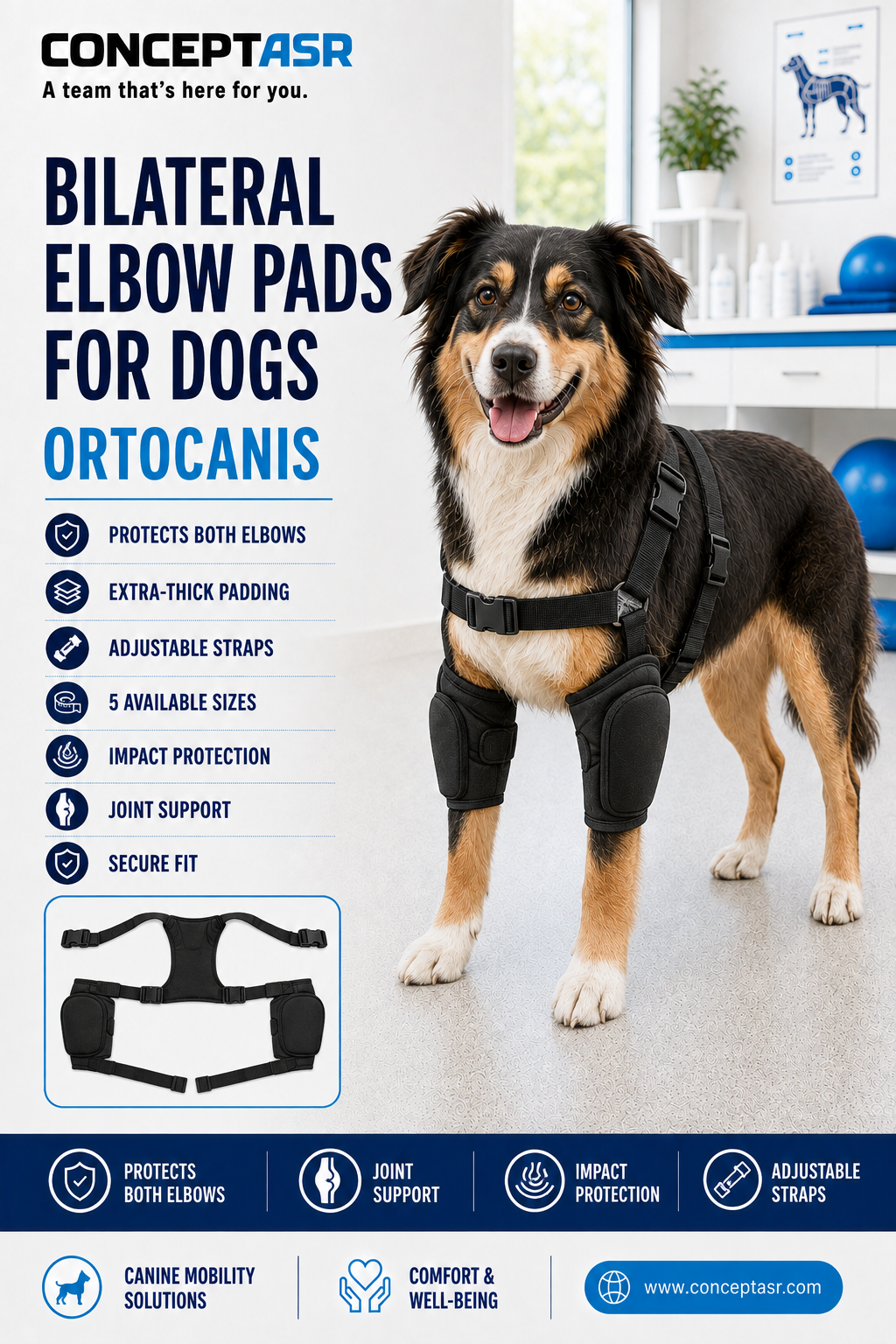
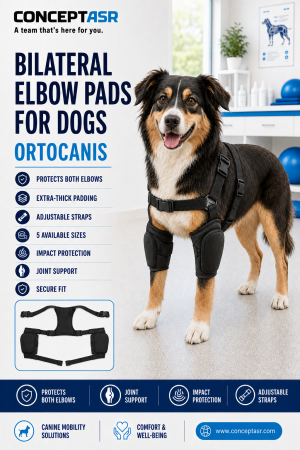
The Bilateral Elbow Pads for Dogs provide simultaneous protection and support for both of a dog’s front elbows. Designed by Ortocanis, the orthosis combines two neoprene elbow sections, extra-thick protective patches and an adjustable strap system that helps keep the pads correctly positioned.
The reinforced areas help cushion the elbows when the dog lies on hard surfaces. The neoprene construction also provides gentle support and retains a comfortable level of warmth around the joints.
Available in five sizes, the bilateral design may be suitable for dogs requiring protection on both elbows during daily activities, rest or a veterinarian-supervised recovery program.
Protection for Both Elbows
Dog elbows can be exposed to repeated contact with floors and other hard surfaces. This is especially common in large dogs, senior dogs and animals that spend considerable time lying down.
The extra-thick protective patches create a cushioned barrier between each elbow and the resting surface. The bilateral design ensures that both elbows receive protection within the same connected system.
Unlike an individual elbow brace, this model includes a pad for each front leg. Its connecting straps help reduce movement and keep the protective sections aligned with the elbow joints.
Reinforced Neoprene Construction
The elbow sections are made from supportive neoprene. This flexible material conforms around the joints and helps retain warmth.
Each elbow is covered by a reinforced patch designed to absorb some of the contact associated with resting on hard flooring.
The pads should remain centred over the elbows without pinching the skin, restricting movement or sliding down the legs.
Adjustable Strap System
The bilateral orthosis uses adjustable straps to connect and position the two elbow pads.
The upper hook-and-loop strap is designed to establish the overall fit. Once this adjustment has been completed correctly, it generally does not need to be reopened each time the product is removed.
The hook-and-loop closure located near the elbow area can then be used for routine installation and removal.
All straps should lie flat without twisting. They should be secure enough to keep the pads positioned but should not create excessive pressure around the dog’s chest or legs.
Potential Applications
A veterinarian may recommend bilateral elbow protection in situations involving:
- Elbow calluses
- Hygromas or bursitis
- Repeated contact with hard surfaces
- Elbow osteoarthritis
- Elbow dysplasia
- Joint instability or hypermobility
- Swelling around the elbow
- Certain proprioceptive deficits
- Temporary postoperative protection
- Conservative veterinary management
These conditions require veterinary assessment. The product does not replace diagnosis, medication, surgery, wound care or rehabilitation.
Seek professional guidance before using the pads over damaged, infected, open or ulcerated skin.
Five Available Sizes
Measure the circumference around one elbow using a flexible measuring tape. Follow measurement number 2 shown in the Ortocanis measuring diagram.
Available sizes:
- XS: elbow circumference from 7.5 to 11.5 cm
Approximate breed references: Cocker Spaniel or Whippet - Small: elbow circumference from 11.6 to 16 cm
Approximate breed references: Collie or Springer Spaniel - Medium: elbow circumference from 16.1 to 20.5 cm
Approximate breed references: Labrador Retriever or Dalmatian - Large: elbow circumference from 20.6 to 25 cm
Approximate breed references: German Shepherd or Golden Retriever - Extra Large: elbow circumference from 25.1 to 32 cm
Approximate breed reference: Rottweiler
Breed examples are approximate and should not replace measuring.
Measure both elbows before ordering. If the circumferences differ, contact ConceptASR Vet or consult the treating professional for help selecting the most appropriate size.
If the dog falls between two sizes, Ortocanis recommends selecting the smaller size.
Fitting the Elbow Pads
Place the orthosis so the reinforced patches are centred directly over both elbow joints.
Adjust the upper strap until the pads remain correctly positioned. The dog should still be able to stand, lie down and move naturally without excessive restriction.
Use the elbow-level closures for regular installation and removal once the upper adjustment has been established.
After fitting, check that:
- Both reinforced pads cover the elbows
- The straps remain flat
- No skin or fur is pinched
- The product does not restrict breathing
- The pads do not rotate around the legs
- The dog can move and rest comfortably
Recheck the fit after the dog has walked and changed positions several times.
Gradual Introduction
Introduce the Bilateral Elbow Pads for Dogs gradually.
Begin with short supervised periods indoors. Observe how the dog walks, sits and lies down while wearing the product.
Remove the pads after each initial session and inspect both elbows, the chest and all areas underneath the straps.
Watch for redness, rubbing, pressure marks, swelling or unusual discomfort. Discontinue use and consult a veterinary professional if persistent irritation appears.
Care and Daily Inspection
Keep the neoprene and reinforced pads clean and dry. Follow the manufacturer’s care instructions and allow the product to dry completely before placing it back on the dog.
Inspect the hook-and-loop closures and straps regularly. Remove accumulated hair and debris that could reduce fastening strength.
Do not place the product over an untreated open wound. Dogs with hygromas, ulcers or postoperative incisions may require professional wound care and a specific wearing protocol.
Special Considerations
Seek professional advice before fitting this product on a dog with a front-leg amputation. Altered weight distribution and body shape can affect the positioning and safety of the strap system.
Dogs with major differences between their two front legs may also require individual assessment.
Veterinary Guidance Recommended
The Bilateral Elbow Pads for Dogs are protective orthopedic supports and do not replace veterinary diagnosis or treatment.
Consult a veterinarian if your dog has elbow swelling, persistent calluses, limping, stiffness, pain or difficulty moving.
A veterinarian or qualified canine rehabilitation professional can determine whether bilateral elbow protection is appropriate and establish the recommended wearing schedule.
ConceptASR Vet offers personalized assistance in English and French to help customers review the elbow measurements and available sizes before ordering.
Reviews
There are no reviews yet.